

Three Trees Pie
Putting the "tart" in tart

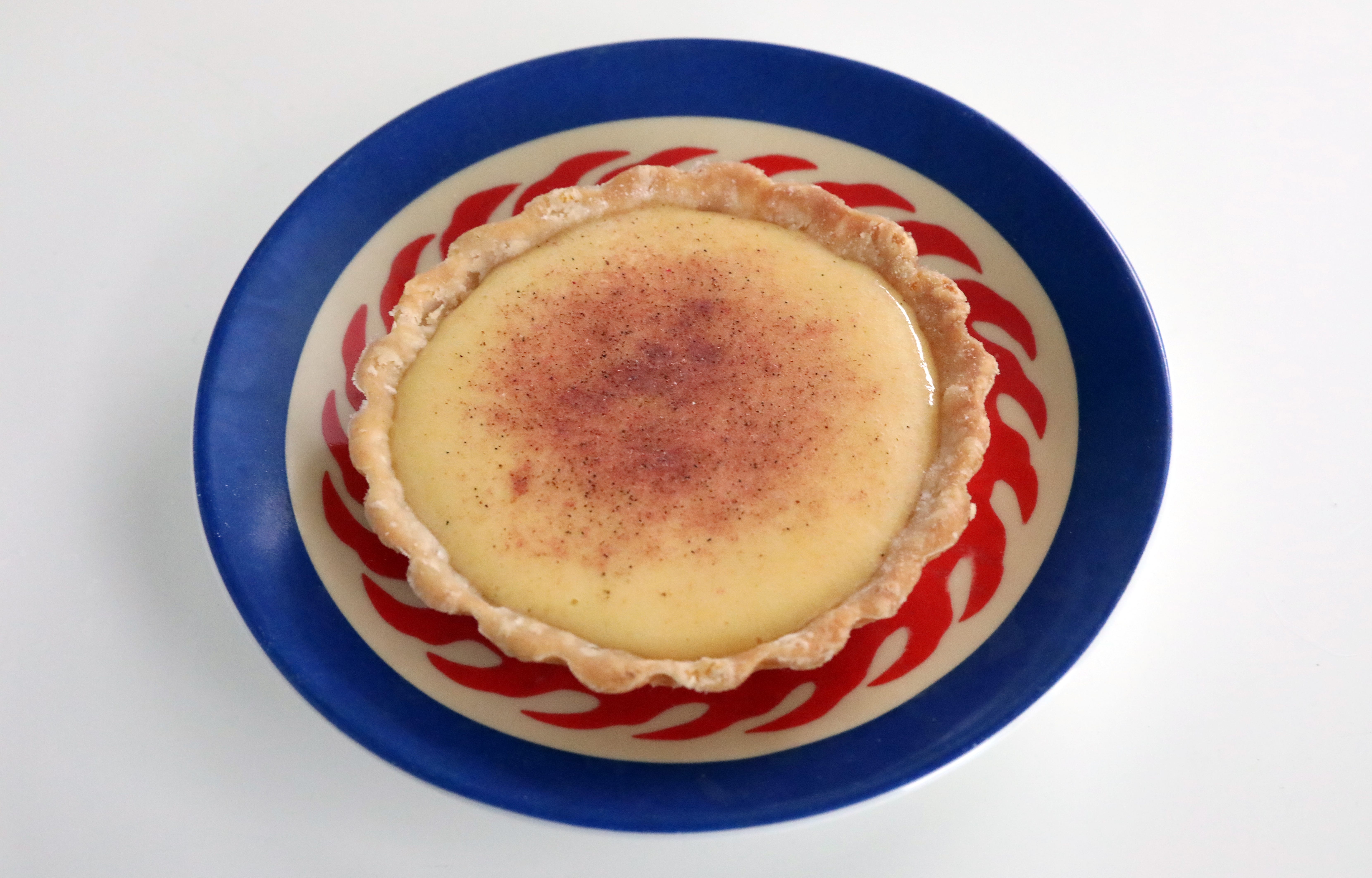
While citrus can’t survive our winters here in the northeastern US, we’re lucky to have some pretty wonderful substitutes that grow all over the place. This little tart uses two of them, both of which grow on trees—spruce tips and sumac bobs—plus maple syrup from a third tree, hence the name. I’m not going to tell you that this tastes exactly like key lime pie, but damn if it doesn’t come close. And though it’s different, it’s in no way inferior to that classic. This combination delivers a bright sourness balanced by deep but not cloying sweetness, and a decidedly limey vibe courtesy of the spruce, which is my go-to sub for lime.
Here’s how you make the magic happen:
For the crust, you’ll need a batch of my grandmother’s best pie crust in the world.
For the filling, you’ll need to make a vinegar curd, which is just like a lemon curd but using some beautiful homemade spruce vinegar. You can obviously use a different type of vinegar, say one flavored with elderflower or rose, or any other sweet-friendly herb or flower or combination thereof. Do not use shitty store-bought vinegar; the result will not be good for dessert—though it might work as a savory custard/sauce for fish, chicken, or vegetables so feel free to play around with that. Use the best vinegar you can make or get.
Helpful posts on making your own vinegar:
If you’re in the habit of making tepache or kombucha, the most interesting nuances between sweet and sour arrive as those ferments close in on becoming vinegar without having fully arrived. That’s what I used to make this: a ferment made with spruce tips and honey in water that had moved past beverage status and was fast becoming vinegar but had not achieved full acidity. So if the thought of using full-strength vinegar puts you off, consider mixing some with kombucha or fruit juice until you get a flavor and tanginess that speaks to you. Maybe start with 50/50 and compare that to lime juice. Or just make a kombucha curd! There are no rules, only flavor.
Here’s how I made my filling:
1 egg
3 egg yolks
1/4 cup/65g maple syrup
1/2 cup/100g vinegar (or vinegar/kombucha mixture)
20g salted butter
Whisk the eggs and syrup together until fully combined. Heat the vinegar until just shy of boiling, then add a third of the total amount to the egg mixture, whisking constantly, followed by another third, still whisking, and then the rest. This tempers the eggs and will help to keep them from curdling during the next step.
Move the pan with the custard onto the stove. Over medium heat, whisk steadily as the mixture begins to cook. As soon as it thickens, add the butter while still whisking until the butter melts. Remove from the heat and pour it through a sieve to catch any bits of cooked egg. Chill in the fridge with a piece of parchment laid over the top of the curd to prevent a skin forming. Ideally you should let this set overnight in the fridge, but you could get away with a couple of hours, especially if you spread it out in a wider container so it cools faster.
Preheat your oven to 350˚F/180˚C.
Roll your crust out and put it in a buttered tart pan (I use one with a removable bottom and fluted edges). Dock the bottom and cover it with a piece of parchment, then put pie weights on top of that. Bake it for about 15 minutes, until the edges catch some color, then remove the weights and parchment and pop it back in for another 5 minutes to firm up the bottom.
Pour your custard into the crust and spread it around with a spatula. Now it’s time to use the third tree, in the form of sumac sugar: roughly 50/50 stag horn sumac powder and 10x sugar. I harvest sumac every fall, and when dried it stores beautifully for long periods. It’s got a wonderful, citrusy flavor (quite close to blood orange) and plenty of bracing acidity that adds a wonderful extra layer of complexity to this tart. Sift the sumac sugar through a sieve over the top of the tart, covering it in a thin layer (I left part of the one in the photo uncovered so you can see the curd).
At this point, you can cut and serve it, or you can also pop it under the broiler for a minute or two to brulée the top a bit. Your call—both are good. This is a genuinely fun and exciting way to expand your dessert horizons, especially if you live somewhere where citrus won’t grow. And learning to make custard is its own reward.