

Donabe Cassoulet
A French classic made with Japan in mind

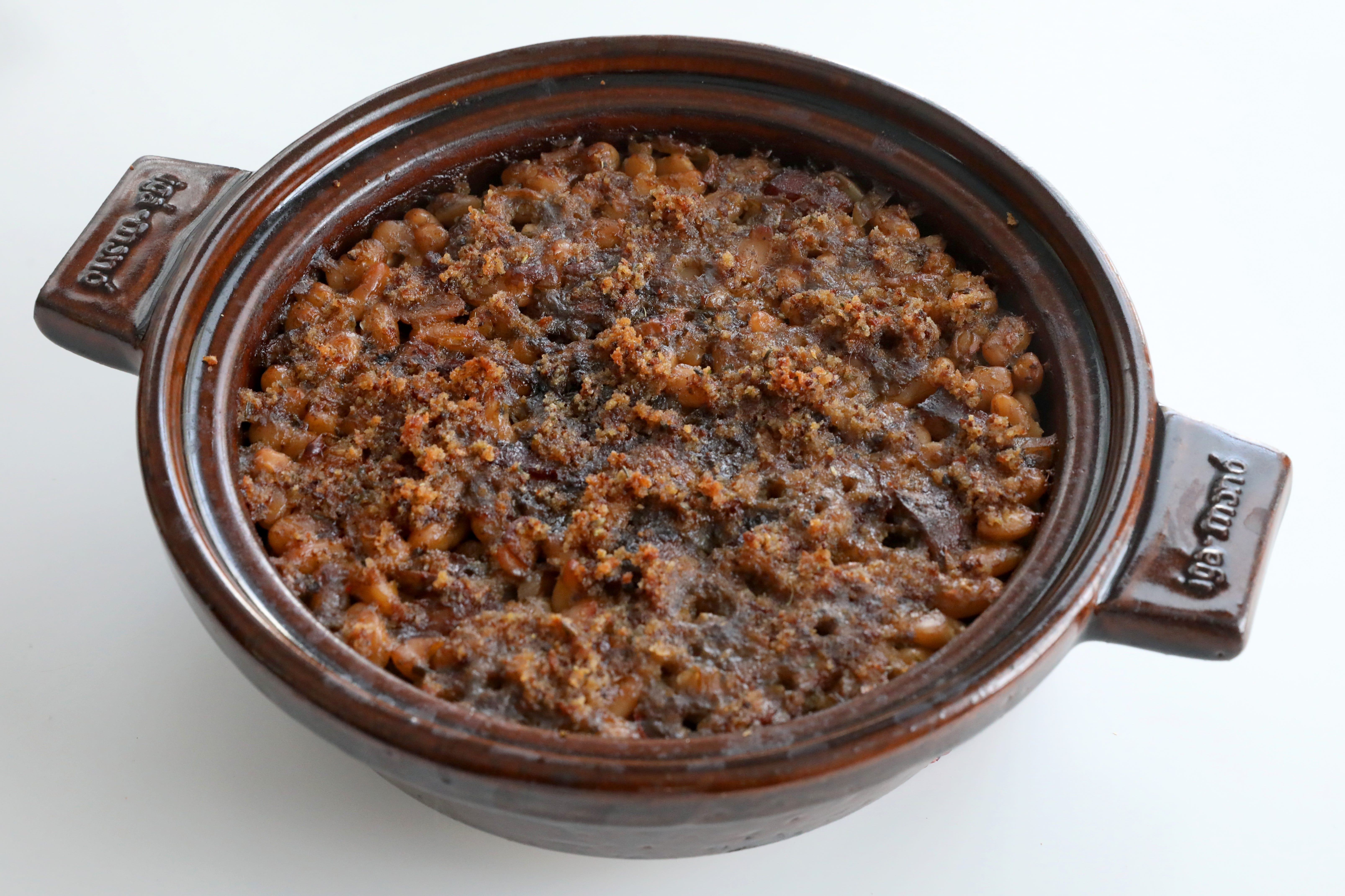
It has been savagely cold here—lows well below zero Fahrenheit, which means between -10˚and -25˚C for those of you in the civilized world—which though daunting and harsh is also beautiful in its way: perfect blue skies and bright sun that’s climbing visibly higher in the sky each week as the days lengthen. It’s also nice to know that we can still have a real winter from time to time, as a treat. Tomorrow it looks like it might actually get above freezing, so I have that to look forward to.
Frigid weather demands comfort food, and cassoulet ranks pretty highly in that category. I have a particularly fond relationship with this dish, since I learned to make it from the great Kate Hill when I visited her in Gascony in 2012. That trip was the grand prize for winning a year-long charcuterie contest for food bloggers back in 2011, during the golden age of blogging. You should go check out Kate’s spot for her expert take on the subject and lots of other great Gascon content (Gascontent for short). What I want to talk about is this pretty straightforward version that borrows from Japan in a few crucial ways, yielding a result that tastes traditional but has a couple of notable qualities worth unpacking.
Whichever version you choose to make, and whatever combination of meats you bring to bear on this epic winter feast, you should remember that cassoulet is a bean dish. The meat is important, but the beans are the main event. You want to look for tarbais beans if possible—they’re large white beans that maintain their shape during a long, slow cook. You should also try to get some duck confit, or better yet make some. I haven’t written up that method yet but I’ll make an effort to rectify that soon.
This is a two-stage cook, so with an overnight soak for the beans you’ll want to spread the next two steps across two subsequent days or, better still, make this one of your easy projects for a lazy Sunday where the dish spends all afternoon bubbling contentedly in the oven while you take a walk and read something edifying on the couch. The cook time is long and leisurely, but the effort is pretty low—especially given the magnificence of the result. It’s also a dish that’s easily made in quantity, and the diverse nuggets of carnal deliciousness nestled into the luscious beans make this something that will appeal to almost everyone.
The leftovers also rock ever so hard, especially on toast with a fried egg on top.
