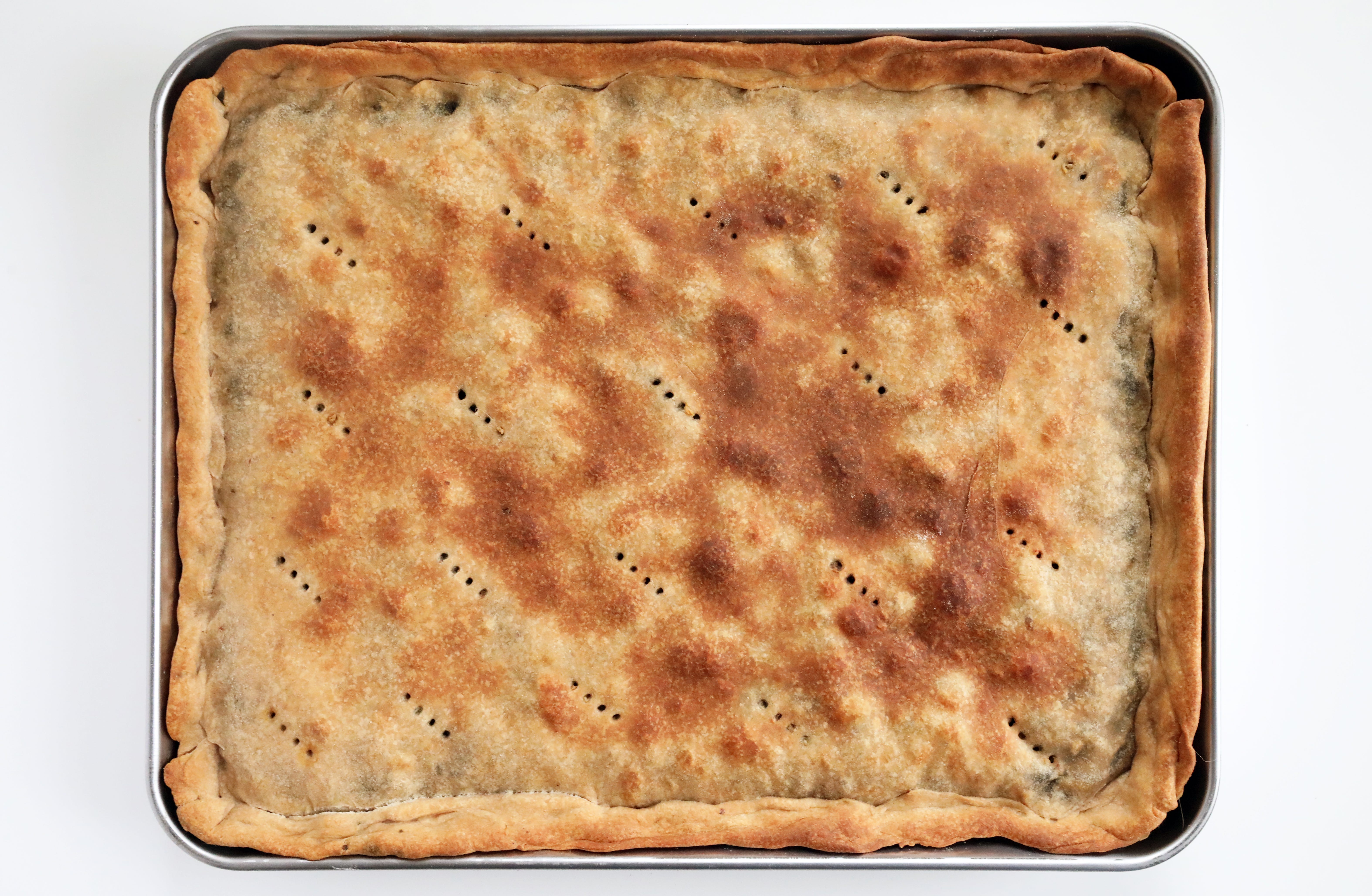
Erbazzone
This season's must-have pie

***Reminder***
To celebrate this newsletter’s second birthday, yearly subscriptions are 20% off for the month of May—including gift subscriptions. Paid subscribers make this publication possible, and I’m so grateful for all of your support. Join us for recipes, techniques, and intel that you simply won’t find anywhere else—including live video classes. I mostly write about my original inventions and discoveries, not just versions of dishes that already exist all over the web. Most of the good stuff is behind the paywall, because I’ve spent 20 years diving down every culinary rabbit hole I can find, bringing back priceless knowledge that will make you a better cook. Not AI slop, real information for real humans cooking real food.
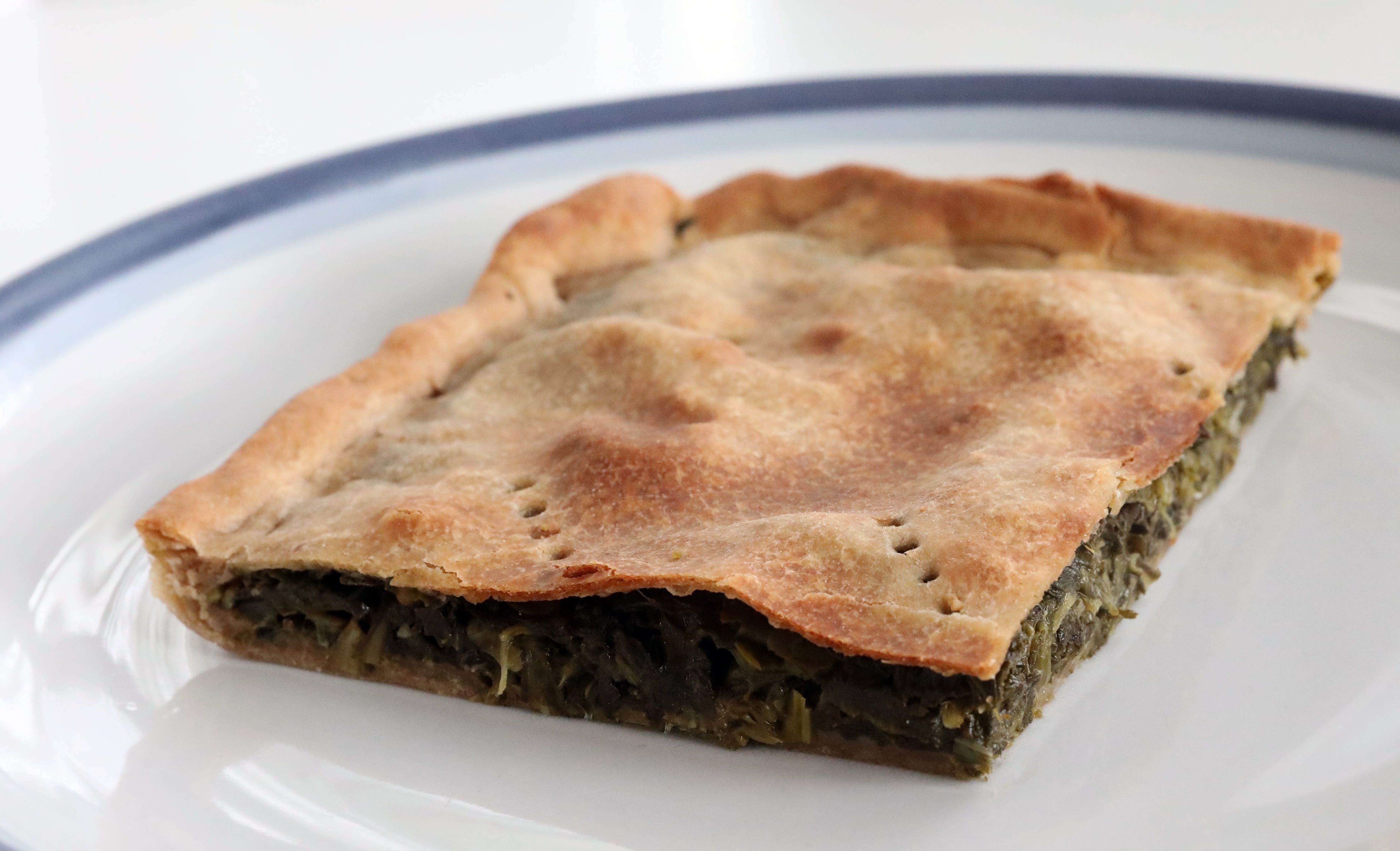
Spring is in full swing here, and that means greens aplenty here at ToB HQ. To celebrate, I want to hip you to a delicacy that represents one of my absolute favorite ways to dispatch an armload of tasty leaves. Erbazzone, a.k.a. scarpazzone, is a vegetable pie popular throughout Emilia-Romagna and parts of Liguria. This is real cucina povera—traditionally it’s made from the stalks of chard and beets (the least desirable and therefore cheapest parts) mixed with some green onion, grated parmigiano, and minced lardo or pancetta (if available or desired), sautéed together and then baked inside a simple crust. Spinach and wild herbs were also frequently used in various combinations depending on the season. Like all peasant food, it’s a recipe with lots of leeway depending on whatever greens you have available.
My chard is still small, but last fall’s spinach is about to bolt so I cut a bunch of that. I cut several kinds of chicories, also regrown from the fall planting, and the sylvetta arugula which volunteers more enthusiastically than any other plant in my garden. I love it so much, especially this time of year when it has an almost fatty flavor that balances its sharpness. Most of the dandelions around here have flowered, but I found some younger ones that hadn’t yet so I yanked those too. I also grabbed a couple of scallions, also overwintered, and snipped some young borage leaves and various herbs (oregano, thyme, sage, and parsley).
For the crust, traditionally it’s a super-simple short dough made from flour, water, and lard—though many versions call for both lard and olive oil or just oil. I’ve worked out a great version that can use either, or butter, or even coconut oil if you like, and it comes together in about a minute flat. You can also use a classic pastry-style short crust like my grandmother’s Best Crust in the World if you want a gorgeously perfect and flaky option.
Erbazzone is usually baked in a rectangular dish and then cut into squares. It’s magnificent eaten hot from the oven, but cooled off and wrapped it’s a fantastically portable sandwich-type thing that’s perfect for picnics and lunchboxes alike. So make a big one for dinner, and then send everyone off to work or school the next day with a gleaming slab of green goodness. Or make this for an event or pot luck situation, since it’s a crowd-pleasing sheet pan dish that scales up really well.
OK, let’s learn how to spin gold from some greens, some herbs, some flour, and some fat.