

Making Do
The many virtues—and pleasures—of limitations

***Reminder***
To celebrate this newsletter’s second birthday, yearly subscriptions are 20% off for the month of May—including gift subscriptions. Paid subscribers make this publication possible, and I’m so grateful for all of your support. Join us for recipes, techniques, and intel that you simply won’t find anywhere else—including live video classes. I mostly write about my original inventions and discoveries, not just versions of dishes that already exist all over the web. Most of the good stuff is behind the paywall, because I’ve spent 20 years diving down every culinary rabbit hole I can find, bringing back priceless knowledge that will make you a better cook. Not AI slop, real information for real humans cooking real food.
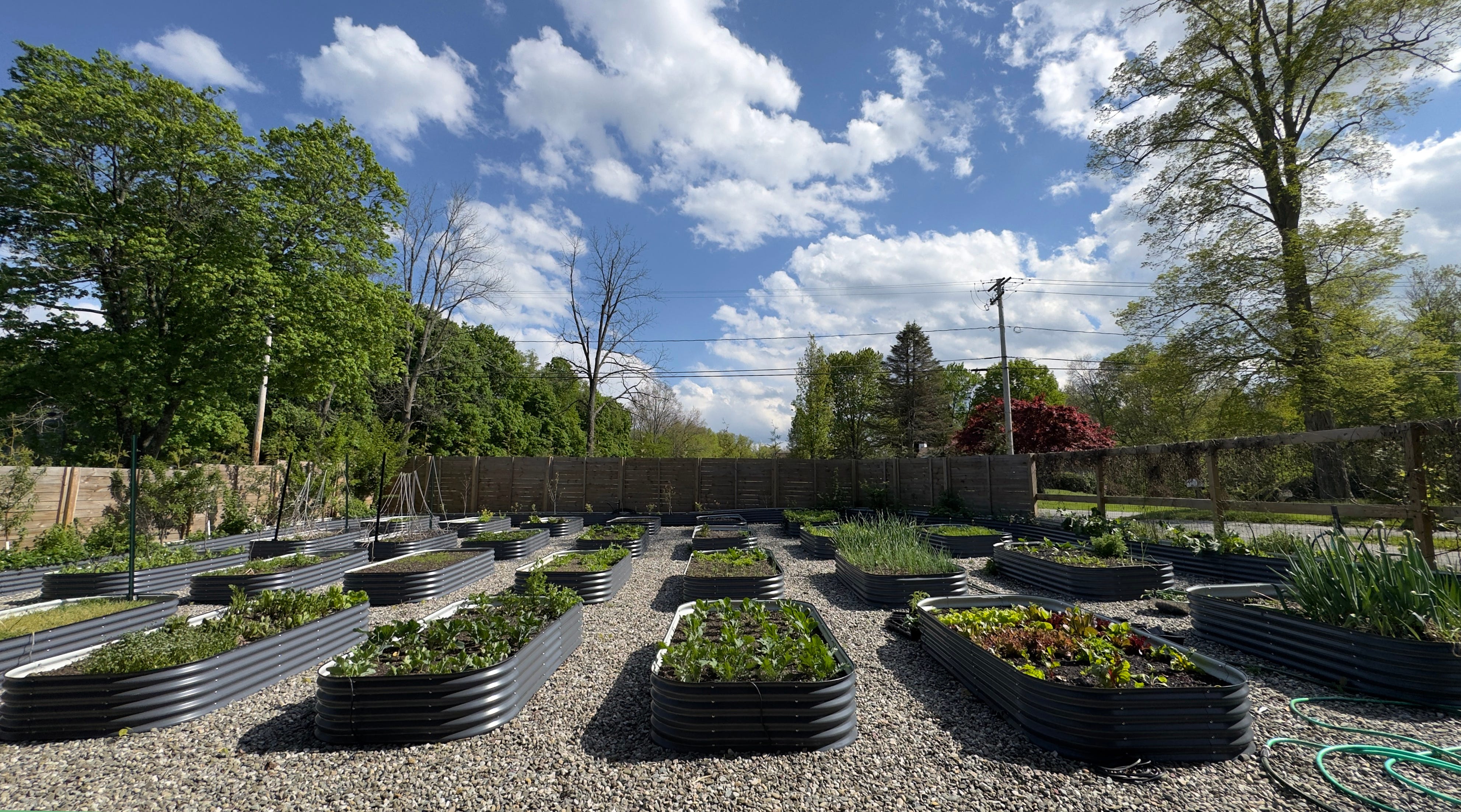
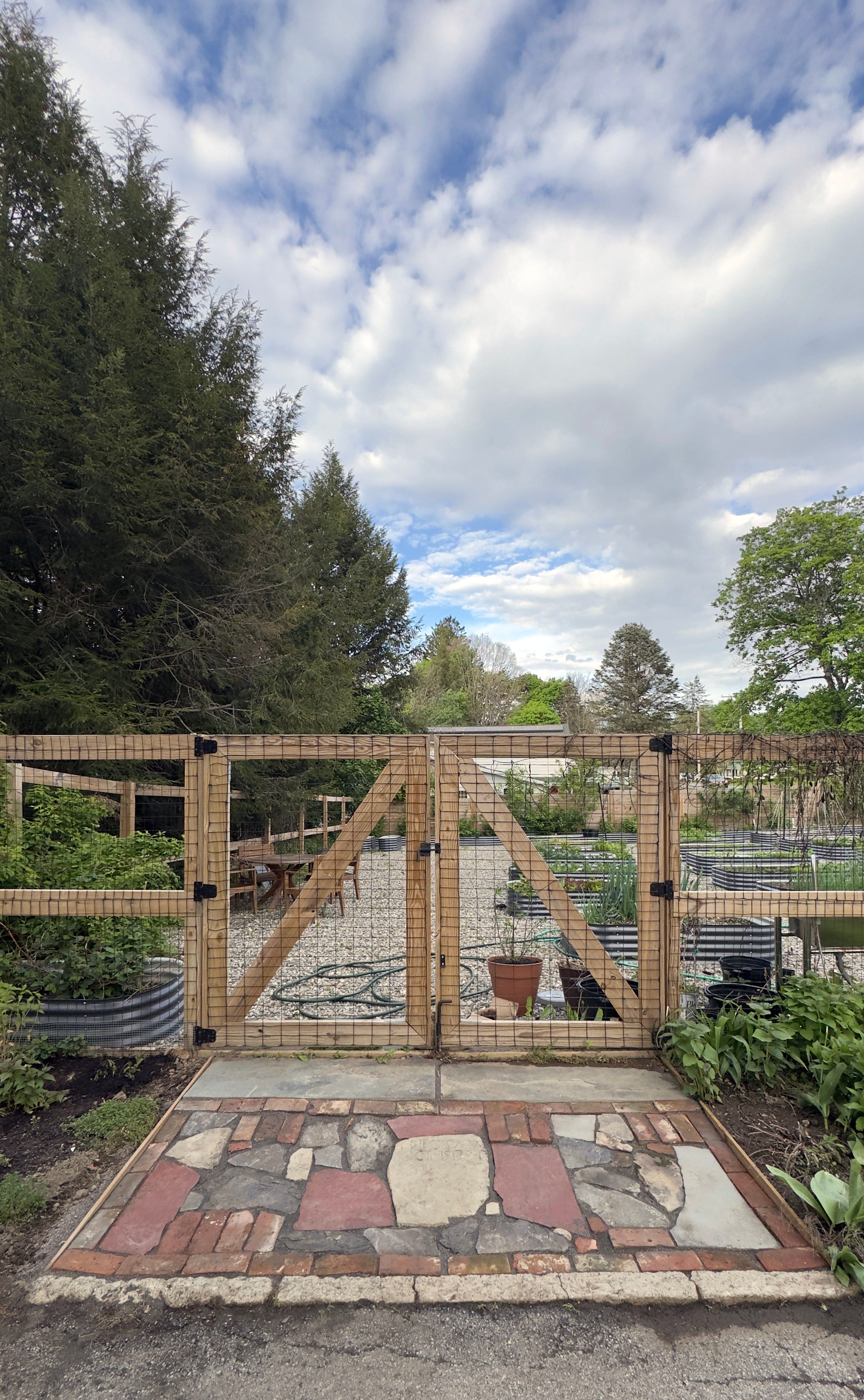
When I put in the garden a couple of years ago I left a strip between the fence and my driveway that I planted with a bunch of native perennial herbs and flowers. They’ve taken to it really well, crowding out most of the weeds and making for a beautiful, aromatic, and low-maintenance area. The part in front of the garden gate needed some work, though. I bought a couple of big bluestone slabs to serve as a threshold, but I couldn’t quite make up my mind what do do with the rest.
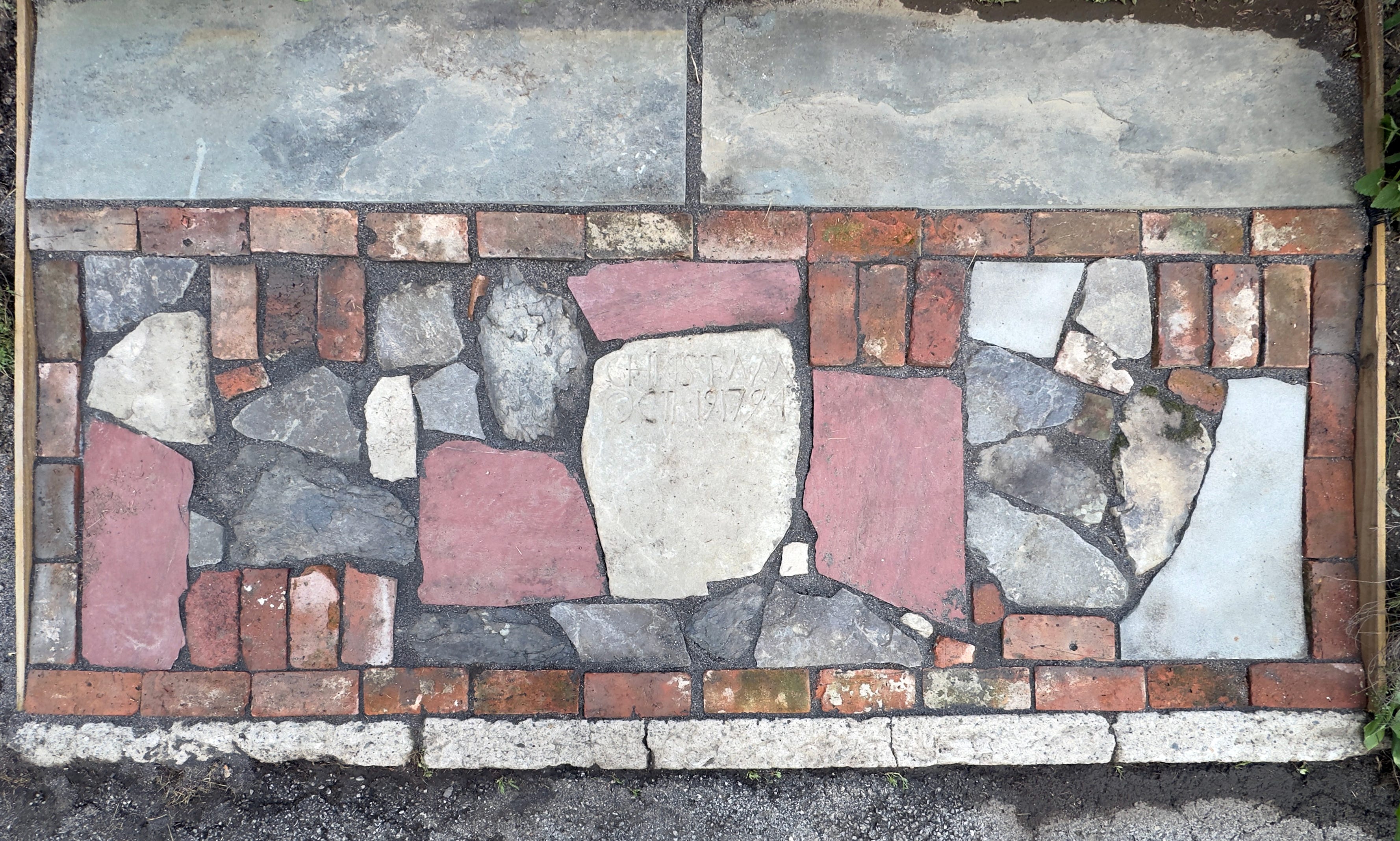
As I did other outdoor projects I unearthed various bricks, flagstones, and flat rocks and started a pile. Recently, with the discovery of a few more, I realized I had enough to make a sort of mosaic patio in the roughly 4 x 8 foot area. Their odd mix of irregular and rectilinear made for a fun and challenging puzzle, and I’m really happy with the result. It’s as far from generic as it is possible to get. It ain’t exactly the floor of San Giovanni in Laterano, but it’s unique and very specific to the history of this piece of land. And it will stay free of mud and weeds for quite a long time.
Best of all, the large stone in the center (which was leaning against a wall in my garage) features a name and a date carved inexpertly into it: Christa M and what looks like October 19, 1794. My house was built in 1797, so that makes sense. Was it a gravestone, or just someone practicing their carving? Its origin story is a mystery I am unlikely to solve.
None of this has anything to do with food, except for the fact that my garden is now one step closer to being complete. But this approach, making a virtue out of limitations, transposes most effectively into the cooking arena. It was the theme of the collaborative dinners I cooked with Karyn Tomlinson’s team at Myriel in St. Paul, MN back in February. That notion—of finding not just serviceable solutions to hunger but transcendently good ones because you have limited options—is the foundation of my ethos in the kitchen.
When you have few ingredients, you need to make them count. I often ask my students to raise their hands if one of the best meals they’ve ever made was on the last day of a vacation when everything in the fridge needed to be used up. Hands always go up, because the exigencies of a limited set of ingredients mean you have to focus and be deliberate since everything plays an important role and there’s not a lot of room for error. This enforced frugality makes us better cooks—it’s the opposite of option paralysis, and a powerful lesson lies therein.
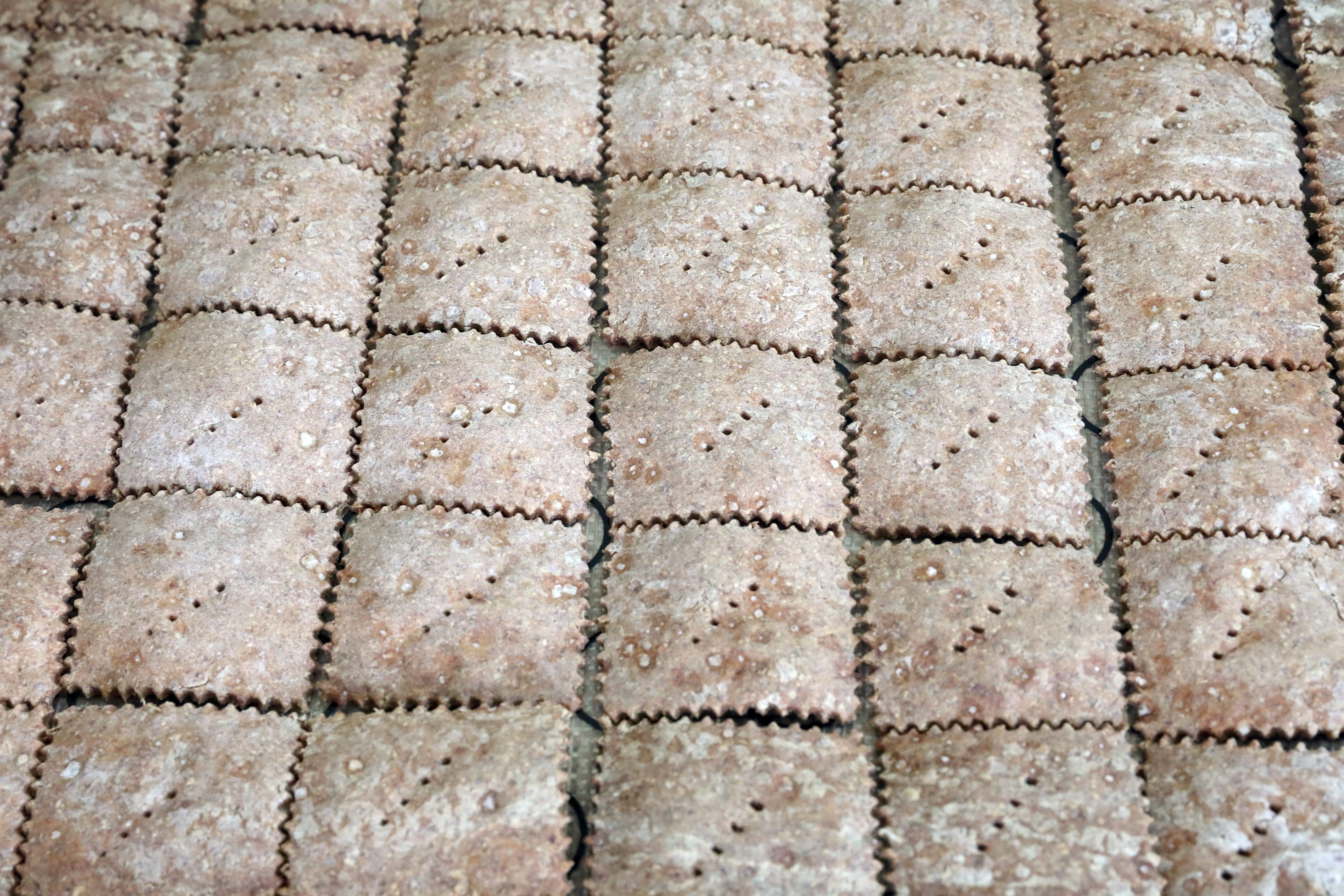
Now, finally, some food: these rye crackers. I’ve written before about my love for sourdough discard crackers (that link leads to a guest post I wrote over at Wordloaf, Andrew Janjigian’s spot, outlining five variations on the theme) but in this instance I wanted to go even farther into the realm where limitations and inspiration overlap. These crackers came about because I had some very old starter (hadn’t been fed in a couple weeks) that needed using and a different batch of unrelated crackers that had gone too long in the oven and while they weren’t burnt, they were within sight of burnt and not good eating: dark brown and bitter.
So I crumbled the crackers and let them sit in some water to hydrate. Once they soaked it up I added a little bit more (just enough to cover them and keep them from drying back out) and let them sit out overnight, then blended the result into a slurry. I took the old-ass starter and the burnt cracker purée and figured that rye would be the right choice for flour, aiming in a pumpernickel sort of direction. You can read about my pumpernickel formula here, and these crackers took that open source approach and ran with it.
The following recipe isn’t one that I worked out. I made this dough intuitively, beginning with the starter and purée and then adding other ingredients to reach the consistency I wanted the dough to have. So while I weighed and wrote down the amount of each ingredient, I only did that so I could pass the info on to you—not because I was following any recipe. It all ultimately comes down to an understanding of the role each component plays, and enough experience to know when a dough stands a good chance of working because it looks, feels, and smells right.
Here’s what I used, and why, and what each contributed to the result, in the order I added them:
130g old sour starter: smelly, acetic, and starting to actually form a mother in the layer of liquid on top(!)
Function: flavor and aroma (tangy and intense). Not much in the way of gluten (degraded) or starch (eaten by microbes). My starter is 50/50 flour & water by weight.
100g of burnt cracker slurry (crackers made simply from flour, water, and olive oil)
Function: color and flavor. I’m guessing, but I’d say it ended up being close to the starter in terms of hydration, so we’re still dealing with a very wet mixture.
100g of healthy fresh starter
Function: leavening, developed gluten, and flavor. I added this to give the crackers a little lift.
150g rye flour
Function: Flavor, color, and structure.
50g AP flour (honestly because I had a little in the bottom of the bag and wanted to use it up)
Function: When I mixed and kneaded in the rye flour, the dough was still pretty wet and shaggy. This white flour tightened it up really nicely into a workable dough. If I hadn’t had the AP, I would have used spelt for flavor and a slightly softer texture.
20g olive oil
Function: fat. If you want a seriously snappy cracker, leave the fat out. If you want a softer one, add more.
That adds up to 550g, so I added 1% salt by weight to that = 5.5g. I kept the salt low (normally I’d go up to 2%) because I planned on sprinkling some good crunchy salt on top of these before baking.
I gave this a ±2 minutes) knead and then oiled the ball and put it in a bowl in the fridge overnight—not for any specific reason other than I was running out of daylight.
I rolled them out into a big rough rectangle, use my fluted pastry wheel to cut them into square-ish grid, and then baked them on a silpat on a baking sheet for about 30 minutes at 350˚F/180˚C.
Success! These are seriously good, and all the more so for having nearly half the dough made from things that almost everyone would throw away without a second thought. That right there should resonate. Nobody is going to eat these and say “These taste like the garbage you made them from—you’re either dirt poor or insane.” They’re wonderful: tangy, complex, crisp, and ready for a million delicious dips. So take this as permission to play around with discards, failures, scraps, orphans, and ugly-ass remnants on the edge of putrefaction.
One of the most interesting thing about ferments is that because they’ve been heavily modified by microbes, you could argue that they’re already “spoiled,” albeit in a way that creates flavor, character, and nutrition for us as well as the critters doing the fermenting. So there isn’t a moment where a ferment goes bad—there’s just the continuum of fermentation, moving towards the eventual consumption of all the nutrients in the food. Learn to identify the difference between old and rotten. Also, work small—if these hadn’t been good, I would have been out about 50 cents’ worth of ingredients.
Obviously sometimes a project will get colonized by an undesirable species, and that will ruin it. But absent that kind of contamination, you’re really looking at strong flavors and (usually) increased acidity as the polyculture in your jar evolves and progresses. It’s also worth noting that I baked these crackers in a nice hot oven, so if you have any doubts about the safety of this mad scientist approach, just make sure that your experiments and improvisations finish at a temperature guaranteed to kill everything that contributed to their character along the way.
You have a big garden! Beautiful. And the mosaic patio looks pretty cool :)
Lovely job with the garden entrance, and in stark contrast to the crazy neatness of your garden itself. I too, have a paver story from this week (I don't know what does this, must be the weather, right?). I was seeking morels on the Observatory grounds in a spot where old apple trees have been nearly killed by piles of rubble dumped careless against them by the maintenance staff. I noticed that the most recent pile contained a whole bunch of 12"x8"x2" concrete pavers, most unbroken. In my garden, natural rock hauled from about 100' away on a handtruck (at the expense of my back) forms the retaining walls of terraces, but I have the problem of needing a barrier between the lower terrace and the path in front of the next terrace up to keep the woodchips on that path from invading the terrace below it. These pavers were perfect. Fortunately, I knew who to talk with, and they were kind enough to haul them from the dump site (which is in a restricted access area) to the parking lot, where I transferred them to my 1995 Isuzu pickup. They challenged the suspension of that little truck, but they will do the job perfectly.